Home › Industrial Floors and Specialty Slabs
Reliable, professional industrial concrete floor in Fayetteville, NC from Superior Concrete Fayetteville. Contact us today for a free on-site estimate.
Superior Concrete Fayetteville provides professional industrial concrete floor throughout Fayetteville, NC, North Carolina and the surrounding area. Our licensed, insured crew delivers safe, clean, on-time work with a free estimate before anything begins. Call (910) 387-1298 or request your free quote.
Industrial Concrete Floors Built for Fayetteville Facilities
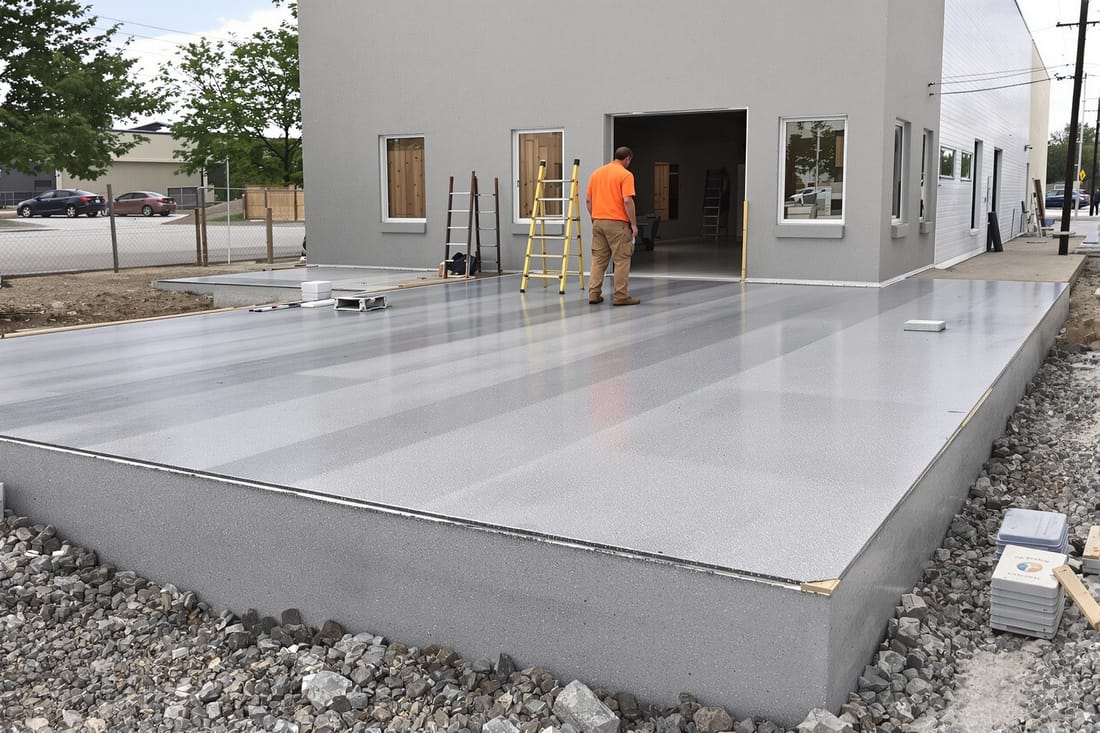
Superior Concrete Fayetteville installs industrial concrete floors for plants, warehouses, distribution centers, and military support facilities throughout Fayetteville and the surrounding Cumberland County area. Our work is built around the way local facilities actually operate, including heavy forklift traffic, pallet racking, wash-down areas, and point loads from machinery anchors.
On every project we start by reviewing your operations, not just your drawings. We ask about traffic patterns, expected wheel loads, racking layouts, wash-down chemicals, and future expansion plans. An industrial concrete floor that will mainly see pallet jacks in a light fabrication shop is designed differently than a slab supporting high-bay warehouse racking or CNC machines with tight tolerance requirements. This planning step drives the thickness, reinforcement style, and joint layout.
We are familiar with Fayetteville soil conditions and the mix of older block buildings and newer tilt-up structures around the city and near Fort Liberty (formerly Fort Bragg). Many local industrial properties have variable subgrade quality due to previous uses or partial additions. We account for that early, so you do not end up with differential settlement or curled slabs where old and new work meet.
How We Design Industrial Slabs for Real Loads
Design starts with the subgrade. We evaluate the existing soil or fill, then determine if proof rolling, lime stabilization, or full replacement is the right move. In older Fayetteville industrial parks, we often find mixed fill and soft spots that need undercutting and compacted stone to prevent slab pumping and cracking.
On top of the subgrade we typically place a graded aggregate base, often 4 to 8 inches of compacted stone, depending on your loads and drainage needs. For interior slabs that must stay dry, we will usually include a vapor barrier under the slab, especially if you will have epoxy coatings, sensitive equipment, or inventory that cannot tolerate moisture.
Concrete thickness, reinforcement, and jointing are tailored to each facility. Light industrial spaces may use a 5 to 6 inch slab with welded wire reinforcement. Heavy warehouse or manufacturing floors often require 7 to 10 inches with doweled joints and rebar or macro synthetic fibers. For areas with high point loads from storage racks, we lay out joints so they do not fall under rack columns and we coordinate with your rack supplier on base plate sizes and anchor details.
We also discuss surface flatness (FF) and levelness (FL) requirements. If you use very narrow aisle forklifts or high-bay automated racking, we specify tighter tolerances than a typical warehouse. That affects placing methods, finishing, and curing, which we build into the proposal so you know exactly what you are paying for.
Specialty Slabs for Heavy Duty and Sensitive Uses
Specialty slabs go beyond standard warehouse floors. Superior Concrete Fayetteville installs machine pads, pump foundations, thickened slabs for mezzanine columns, and high-tolerance slabs for manufacturing lines.
For heavy machinery, we coordinate with your equipment supplier to get actual anchor locations, dynamic load information, and vibration criteria. We often create isolated slabs or thickened pads, for example a 12 to 24 inch reinforced pad under a press or compressor, completely separated from the surrounding floor with isolation material. This helps control vibration and protects adjacent equipment and finishes.
In facilities that use corrosive agents, oils, or frequent wash-downs, we adjust the concrete mix and select the right surface protection system. This might mean a low water-cement ratio mix with integral hardener, then a compatible epoxy or urethane coating applied after proper curing and moisture testing. We do not guess on these systems, we match them to your specific chemicals and cleaning routines.
Cold storage and food facilities around Fayetteville often need slabs designed for temperature swings and strict hygiene. In these cases we pay attention to insulation, vapor drive, slope to drains, and joint detailing so bacteria does not collect. If floor temperatures will be low, we account for thermal movement and potential condensation when selecting joint fillers and sealants.
Installation Process That Controls Cracking and Curling
Industrial slabs are only as good as the process used to place and cure them. Our crews at Superior Concrete Fayetteville follow a consistent sequence intended to limit cracking, curling, and surface defects.
We begin with accurate layout and elevation control using lasers. Forms are set to match final floor elevations, including any required slopes to drains or door thresholds. Rebar or fibers are installed according to the design, with special care around column pads, dock pits, and slab transitions to existing floors.
Concrete placement is coordinated so we can maintain a steady pour rate and minimize cold joints. For large areas, we use laser screeds or vibrating screeds to achieve proper consolidation and flatness. Where doweled joints are required, we use proper baskets or drilled-in dowels, not shortcuts that can lead to joint spalling later.
Finishing is timed to the actual set of the concrete, which in Fayetteville summers can be very fast. We watch wind, temperature, and humidity so we do not overwork the surface or trap bleed water. We commonly apply a hard trowel finish for forklift traffic areas or a broom finish for traction in wet zones.
Curing is critical. Depending on your coating plans and schedule, we either apply curing compound, wet cure with coverings, or use a combination. Proper curing reduces shrinkage cracking and dusting and it affects how well future sealers or epoxy coatings bond.
Cost Drivers, Scheduling, and What to Decide Upfront
Industrial concrete floor pricing in Fayetteville is driven by several technical factors, not just square footage. Slab thickness, reinforcement type, concrete mix design, required flatness tolerances, and the amount of prep work in the subgrade all affect cost.
If an existing slab needs to be removed, the disposal of broken concrete, verification of utilities, and any environmental requirements in older facilities will be part of the budget. In some local plants we also find undocumented footings or abandoned pits that must be handled carefully so new work is not compromised.
We help you make a few key decisions early so your budget and schedule stay realistic. You should know:
• What types of traffic and loads the floor must handle over the next 10 to 20 years.
• Where heavy point loads (racks, machines, mezzanines) will be located.
• Whether you plan to install coatings, line striping, or conductive flooring.
• If operations can shut down completely or if the work must be phased.
For active facilities, we regularly phase work to keep core operations running. This can mean working nights or weekends, isolating work zones with dust control, and planning temporary ramps at transitions. We coordinate pours to allow you to move racks or machinery in stages instead of closing an entire building at once.
Local Experience, Common Problems, and How We Prevent Them
Industrial properties around Fayetteville often evolve over time, with additions built at different elevations and on different fill materials. Common problems we see include slab settlement along building lines where old and new work meet, frequent joint spalling where heavy forklifts cross poorly doweled joints, and moisture-related coating failures on floors poured without vapor barriers.
Superior Concrete Fayetteville addresses these issues in the design and detailing of each project. At transitions to existing slabs we use dowels and, when needed, partial undercut and compaction to reduce differential movement. For high traffic joints, we specify proper basket dowels or load transfer devices and use joint fillers designed to handle forklift wheels without tearing out.
To prevent moisture problems for future coatings, we recommend vapor barriers and appropriate curing methods. If you already have a problem slab, we can evaluate moisture levels, surface hardness, and existing coatings, then recommend repair or overlay options rather than assuming full replacement.
Local codes, permitting, and inspections are all factored into our schedule planning. We are accustomed to working with local inspectors and industrial facility managers around Fayetteville, which helps keep projects moving without surprise delays.
If you are planning a new industrial concrete floor or specialty slab, we are prepared to review your plans, visit your site, and give you a clear explanation of what is necessary to get a durable, low-maintenance floor that suits the way your facility actually operates.